
Written by Elizabeth Ohga
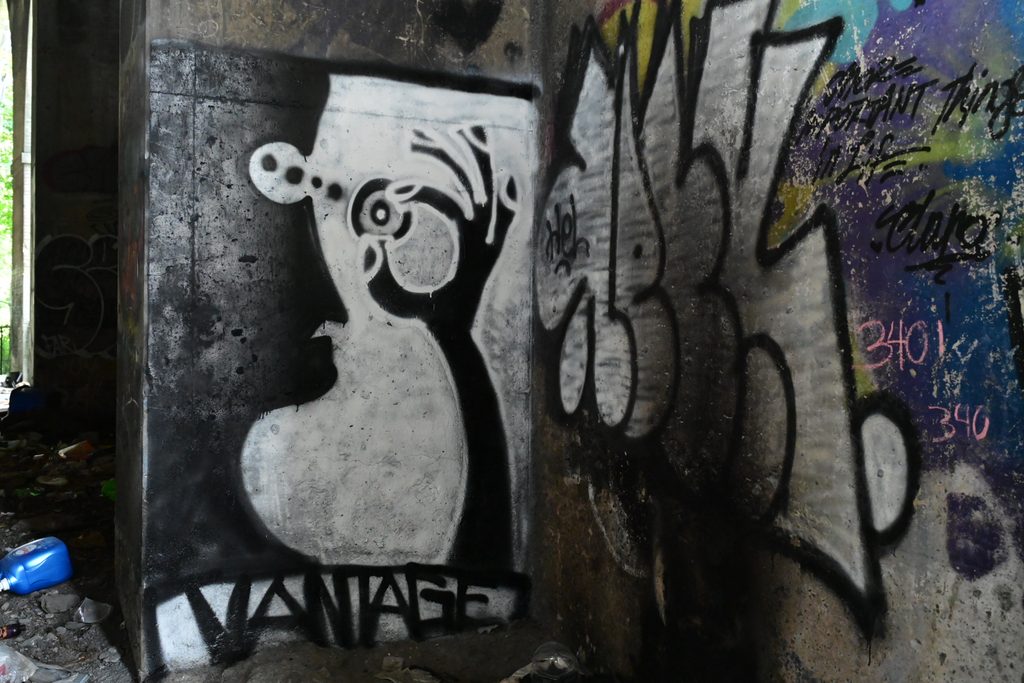
UNTITLED | Photograph by Vantage
The space is no more than 200 square feet, all sharp angles and geometric shadows. Light streams in from the lone window. From the entryway, the woman watches as the dust, disturbed from its languid sunbathing, dances to life. Once the stale air dissipates, she can smell the residual scent of lemons and bleach.
Tiny kitchen, tiny bathroom. The space makes the woman feel large and three-dimensional, permitted and grateful.
Stepping into the space, the woman moves toward a corner that will never see sunlight, a shadowy alcove. This, she decides, is where she will place her innermost desires, to be illuminated only by a full moon to occasionally remind her why.
Pleased with this decision, she steps back into the sun. She notices her shadow against the wall, a her-sized portal into her deepest and darkest.
The sunlit walls are nice too, though the woman knows how light ebbs and flows like the tides. She’ll place shelves against those walls, and on these shelves she’ll display all of her emotions, yes, even the ones she’s been asked to keep to herself, the ones they said were too much, too loud, too wild, and as the sun climbs its way up the wall each day she’ll experience these emotions, all these elaborate and complicated parts of herself, one by one, every day.
Behind her, the stern matriarch of a building manager coughs pointedly. Everything about the manager is pointed and sharp: sharp chin, sharp cheeks, sharp stare. Hair twisted tight into a ballerina’s bun. Crimson fingernails filed to a point. She could cut the light just by stepping into the room.
“The law requires that I disclose that the prior tenant died here,” the manager says, picking at some invisible lint on her wool skirt. “Haven’t been able to rent it out because of it. Bad luck.” She wriggles her manicured fingers in the air as if to flick the bad luck away.
The woman wonders about the prior tenant. In her mind, the prior tenant is a grandmother with light feet, glinting eyes. She imagines that the grandmother placed a small breakfast table next to the window, eating buttered croissants and sipping coffee right up to her last morning, each day throwing crumbs for the birds who chattered their gratitude. She imagines that the grandmother hung a planter outside the window, watering petunias and geraniums every morning from the jars of hope and delight she kept on the breakfast table. And she imagines that the grandmother, in her final moments, was surrounded by her children and grandchildren, those jars of joy overflowing.
Not bad luck at all.
Still, she wonders.
Did the grandmother stare out the window on nights when she couldn’t sleep, thanking the moon for keeping the darkness at bay, for keeping the tides turning?
Did the grandmother whisper her own secrets into that dark corner?
If she places an ear against the wall, will the spider who’s been spinning a web beneath the window come over and whisper the grandmother’s secrets into her ear, like a game of telephone among those who got away?
She can practically taste it, that honeyed yearning, to become the grandmother, the one who got away, the one who dies in this room.
She’d rather die here, nestled amidst the white light and unbending shadows, in these stark contrasts that are all her own, than in the other house. In the other house, her encounters with death were colored, at first, by fear that she’d die, then, later, by dismay that she didn’t. Here, she imagines she can negotiate with death on her own terms. Not on the terms of the man who could charm an entire dinner party then come home to raise a hand to her because she hadn’t smiled brightly enough. This man who had been so alluring, so full of light, masking a darkness just below the surface, threatening to erupt at the slightest spark.
He didn’t like that she talked to the moon; that she wouldn’t kill spiders, cupping them instead in her palm, and releasing them outside with an inaudible whisper; that she’d sit with her head resting on the wall, laughing to herself. He didn’t like her many-sided
complexity, a shape that didn’t fit neatly into a box, that even when he used his fists to try and reshape her, to squeeze her between his four corners, she’d open a window and let in the scents and sounds of the air beyond.
Now, she does the same. As she breathes it in, she looks out at the trees, down at the grass. She looks towards the horizon, places one palm against the glass, the other against her belly. The slightest of curves, imperceptible unless you knew to look, signifying the
beginning of yet another dimension to the woman’s shape.
The manager, who has been watching from the doorway, eventually steps towards the woman, stands close. “Because of the unit’s history, and how long it’s been on the market, we may be able to make accommodations for the rent.”
The woman turns her head, looks first at the manager, whose severe features betray nothing, then past her, at the wall beyond, their silhouettes magnified, spilling onto the ceiling.
“Is there a background check?” the woman asks.
The manager lifts her shoulders, slowly, as if time moves more slowly inside this square room.
“I have cash—” the woman begins, reaching into her purse, but the manager lifts a palm.
“My office is in the basement.”
The manager turns toward the doorway, her high heels muted on the soft carpeting. The woman scans the small room a final time, at the light and shadow, the clarity and promise, then turns and follows the manager, into the uncompromising shadows.
.
Elizabeth Ohga is a writer from Maryland. Her writing has appeared in Your Impossible Voice, BULL, New Pop Lit, and Pangyrus, among others. She was a 2025 Nancy Ludmerer Flash Fiction Fellow.